Gettysburg from Washington
Ninety minutes north, the war’s costliest battle left its ground legible: a guide rides in your car and points, the field itself is free, and the 272 words that redefined the country were spoken over its graves.
The short version
- The drive runs about ninety minutes from the capital with no practical transit alternative — the car is also the tour vehicle, per the alarm’s guide arrangement.
- The Licensed Battlefield Guide program books through the park’s reservation system at a per-vehicle rate — a credentialed guide joins your car for a two-hour tailored tour, the format the alarm calls the trip’s best spend; booking and park information at nps.gov/gett.
- The facts stated plainly: July 1–3, 1863 — the war’s costliest battle, with total casualties around 51,000 killed, wounded, captured, and missing across both armies, and the Confederate invasion of the North turned back.
- The battlefield itself is free and drives on the marked auto-tour route: Little Round Top’s defended flank, Devil’s Den’s boulders, the Peach Orchard and Wheatfield, and the Angle — where Pickett’s Charge broke on the third afternoon, the war’s oft-named high-water mark.
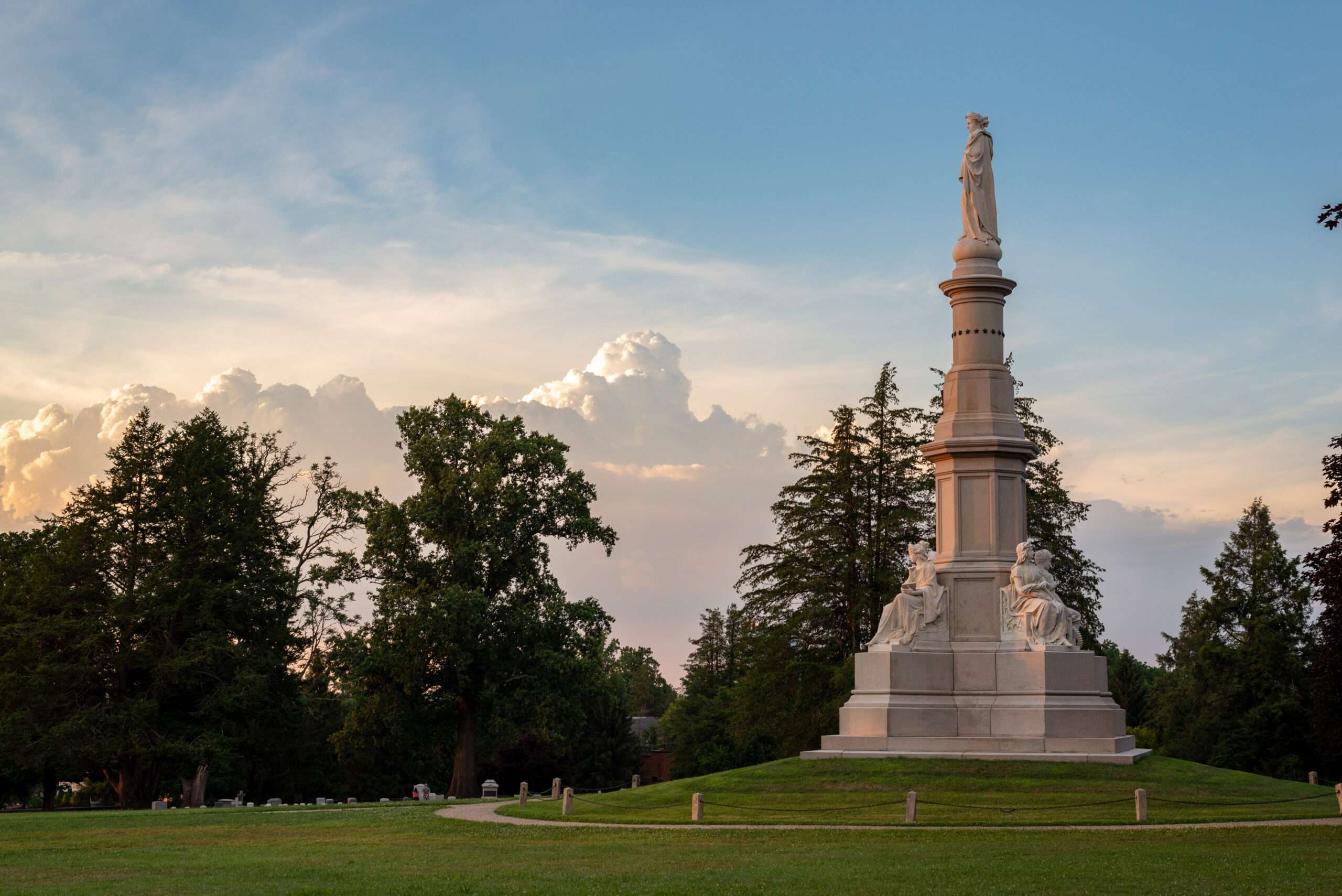
- The Soldiers’ National Cemetery holds the register the alarm set: Lincoln’s November 1863 dedication ran 272 words, delivered over graves still being filled — the Address’s site is marked, and reading it there is the visit’s quiet center.
- The Museum and Visitor Center’s ticketed layer adds the film, the restored Cyclorama painting, and the artifact floors; the town’s own streets — field hospitals in 1863, shops now — carry the aftermath’s story for the walking hour.

Getting there
The guide booking per the alarm is the day’s architecture: reserve the two-hour slot ahead (summer and anniversary weeks book out), start at the visitor center for orientation, and let the guide’s route replace any plan you drafted — the per-vehicle format means the tour is yours, tuned to your questions, at a price that divides well among passengers. Self-guided versions run the auto-tour route with the park app or the audio products; the free battlefield asks only fuel and attention.
The day
Guide hours first while the morning is cool: the standard arc runs the first day’s fields north of town, the second day’s flanks — Little Round Top climbed for the view that explains the map — and the third day’s mile of open ground toward the Angle, where the guide’s pause does more than any monument inscription. After the handoff, return to what asked for more time: Devil’s Den’s boulder maze, the observation towers’ overviews, the state monuments’ marble arms race along Cemetery Ridge. The cemetery takes the early afternoon at the alarm’s register — the Address site, the semicircles of graves by state, the 272 words read where they were spoken. The museum’s film and Cyclorama close the structured day; the town’s streets and taverns absorb what remains. The drive home runs quiet, which is the ground’s usual effect.
When to go
April through June and September through November run the field at walking temperature with the light historians photograph by. The July 1–3 anniversary brings living-history encampments, real-time anniversary programs, and the year’s fullest town — a deliberate visit, booked early. Summer otherwise runs hot across open fields; carry water like the armies wished they had. Winter strips the field to its starkest reading — guides still book, crowds vanish, and the Angle in snow makes its point without help. The register holds year-round: this is a battlefield and a graveyard, per the alarm, and the day carries its weight in any season.
Frequently Asked Questions
Is the licensed guide really worth it over the audio tour?
By wide consensus, yes — the guides are examined on decades of scholarship, the tour adapts to your interests in real time, and the per-vehicle price splits into one of travel’s better ratios. The audio and app versions are solid budget seconds. The alarm’s best-money claim reflects most visitors’ after-the-fact verdict.
How accurate is the 51,000 figure?
It’s the standard scholarly range for total casualties — killed, wounded, captured, and missing across both armies over the three days — with exact counts varying by source and category. The park presents it in that honest range. However counted, it remains the war’s costliest single battle.
What’s actually at the Angle?
The stone wall and copse of trees where Pickett’s Charge reached and broke on July 3 — marked, monumented, and walkable across the same open mile the Virginians crossed. Standing at the wall and looking back over that ground is the battlefield’s most legible moment, which is why every guide ends or peaks there.
Is the museum ticket necessary?
The battlefield and cemetery are free and complete in themselves; the ticket adds the orientation film, the Cyclorama’s restored panorama, and the artifact floors — worth it for first visits and rainy days, skippable for field-first returners. The alarm’s structure treats it as the closing act, not the requirement.
Gettysburg or Harpers Ferry from Washington?
Harpers Ferry (documented on this network) for rivers, cliffs, and the raid that lit the fuse; Gettysburg for the war’s central battlefield at full scale. They’re chapters of the same story — 1859’s spark and 1863’s turning — and the serious history week does both, in that order.